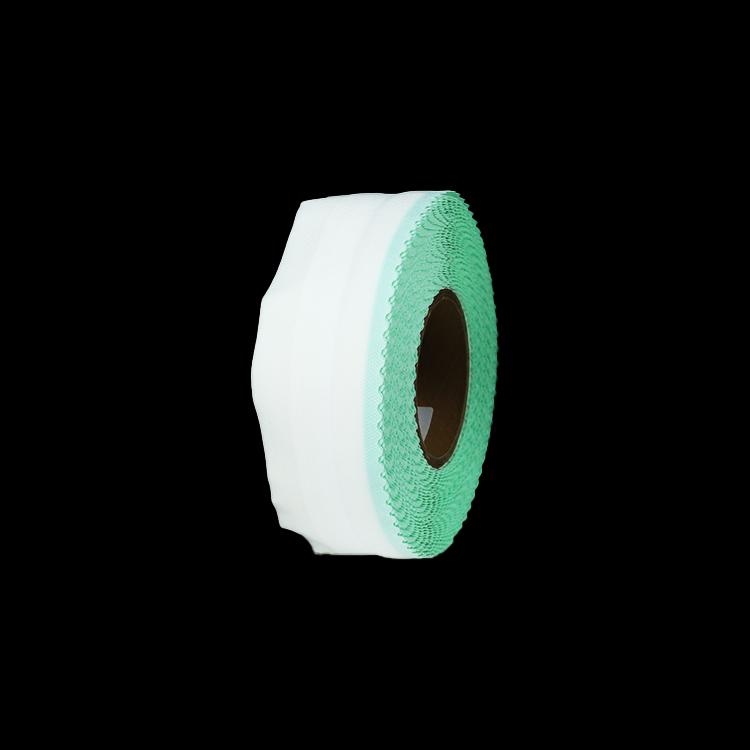
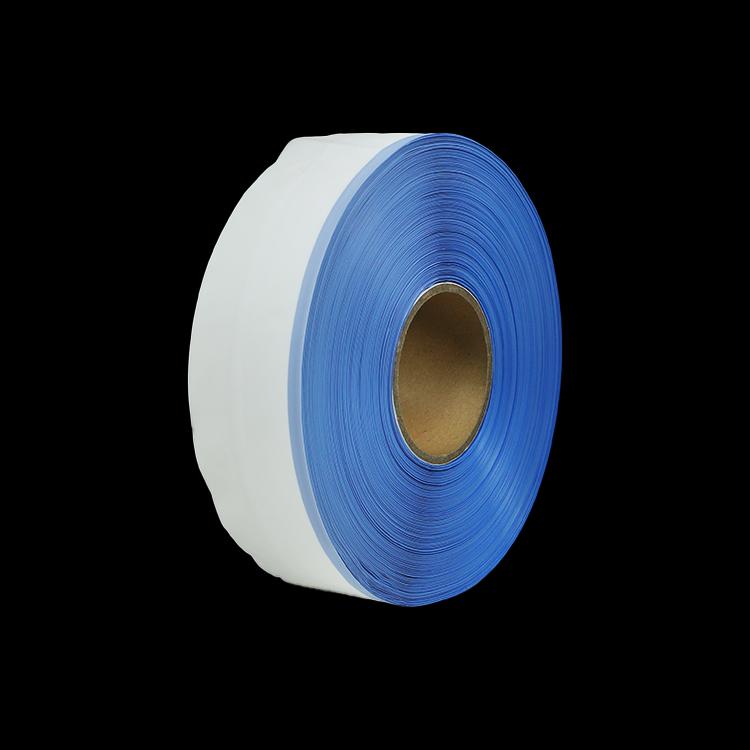
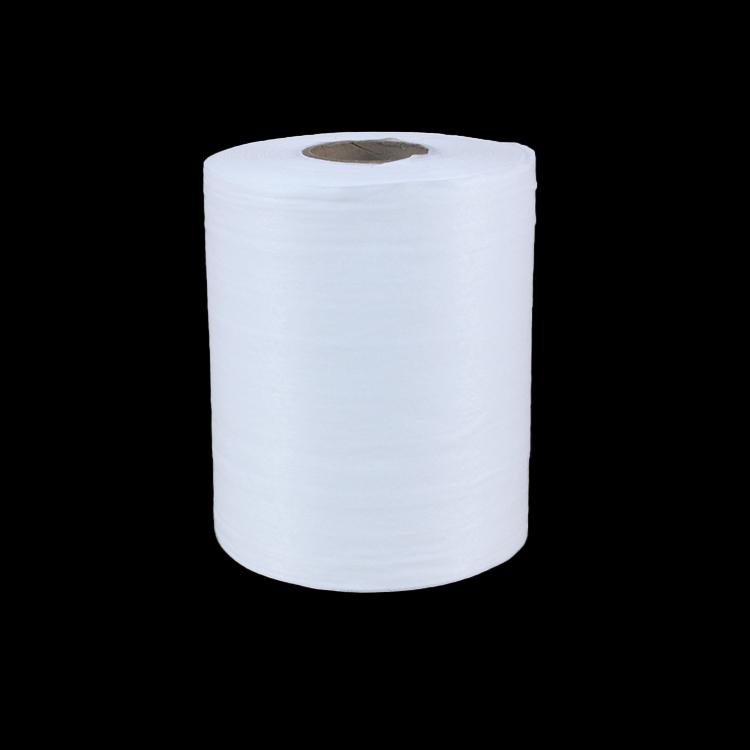
Perforated PE film, also called apertured PE film, is a topsheet material used in baby diapers, sanitary napkins, adult diapers, and underpads. Its role is straightforward: a precision-formed pattern of micro apertures lets liquid pass quickly into the absorbent core while the film surface stays drier than a non-perforated layer. This article explains how the material works, what benefits it brings to product performance and production lines, and what a hygiene raw-material buyer should verify before specifying it.
Scope note: the points below describe the general function of perforated PE film as a topsheet component. Specific GSM, aperture geometry, width, roll length, and performance values depend on the exact specification agreed with the supplier and should be confirmed against your own test data.
What Is Perforated PE Film?
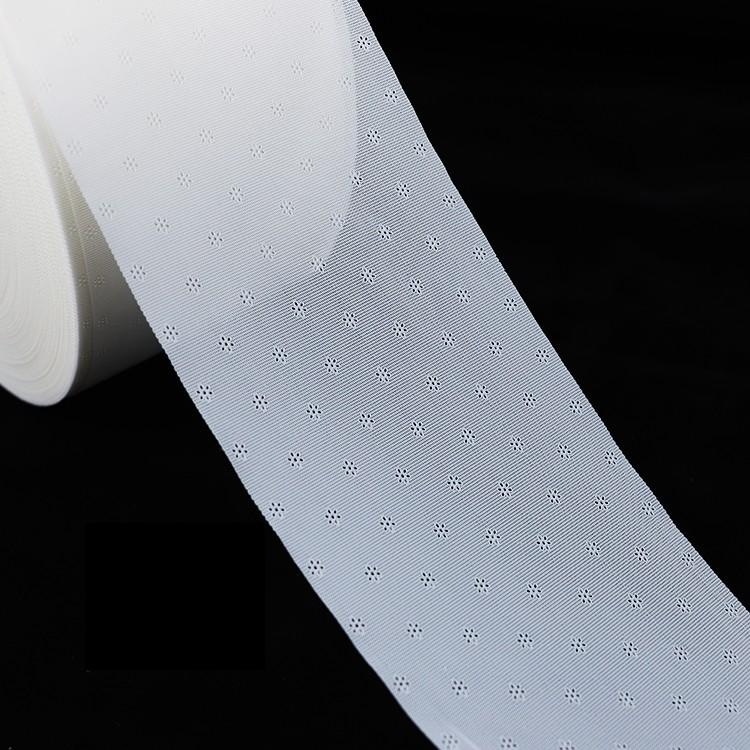
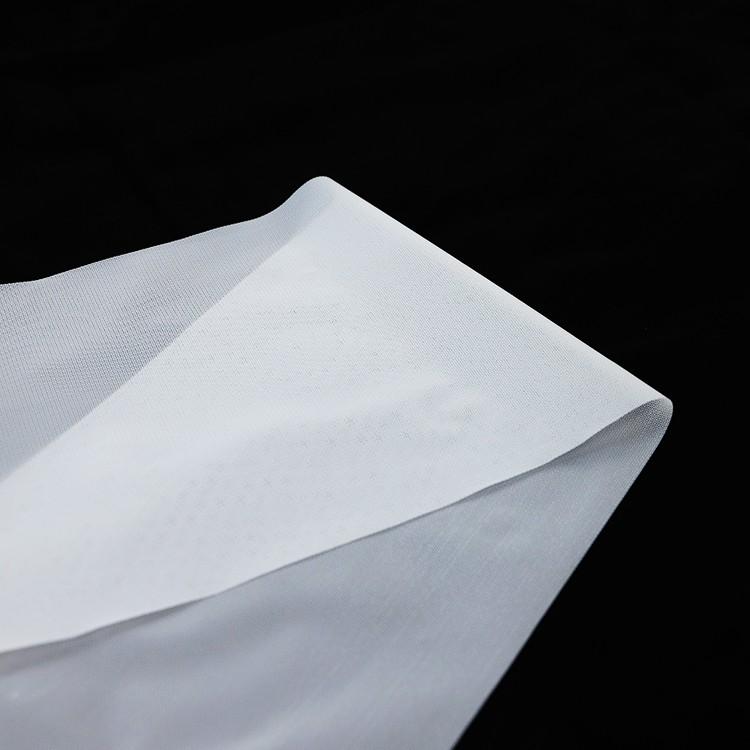
Perforated PE film is a polyethylene-based film engineered with a controlled pattern of small openings. In a disposable hygiene product, it typically sits as the topsheet or as part of the topsheet system, directly above the acquisition and distribution layer and the absorbent core.
The apertures create a one-way path for fluid: liquid moves through the openings into the layers below, while the film surface between the openings limits the return of moisture to the skin. This is the mechanism behind the dryness and comfort claims commonly associated with apertured film topsheets.
Benefits of Perforated PE Film
1. Faster Liquid Penetration
Perforated PE film is designed for rapid fluid transfer compared with non-apertured materials. The open structure gives liquid a direct route into the core instead of forcing it to wick across a solid surface.
Practical advantages include:
-
Faster absorption at the point of insult
-
Less liquid pooling on the surface
-
Improved surface dryness
-
Better overall hygiene for the wearer
Quick penetration matters most in newborn diapers, overnight sanitary products, and adult incontinence products, where the volume per insult and the time between changes are both higher.
2. Excellent Dry Surface Performance
One of the main advantages of perforated PE film is its ability to reduce rewet. After liquid passes into the absorbent core, the aperture design helps limit moisture from returning to the topsheet.
This contributes to:
-
Cleaner skin contact
-
Reduced irritation risk
-
Better wearer comfort
-
More consistent product quality
Rewet performance is normally verified through your own bench testing, because results depend on the film specification, the acquisition layer, the core design, and the test method used.
3. Improved User Comfort
A dry topsheet creates a noticeably better user experience. Perforated PE film offers a smooth surface, a soft touch, reduced skin friction, and comfortable contact with sensitive skin.
This makes the material suitable across user groups, including babies, women using sanitary napkins, and adult incontinence users. Comfort is one of the few performance areas where the wearer's perception directly influences repurchase behavior, so topsheet choice has commercial weight beyond the technical specification.
4. Better Leakage Protection
Rapid liquid transfer allows the absorbent core to capture fluid before it spreads sideways. When fluid is managed at the point of contact, the core is used more efficiently and the risk of side leakage falls.
This helps manufacturers work toward:
-
Lower leakage rates
-
Better fluid distribution across the core
-
Improved overnight protection
-
Greater consumer confidence in the brand
5. Supports High-Speed Manufacturing
Modern diaper and sanitary napkin production lines require raw materials with consistent quality. Variation in a topsheet roll can translate directly into web breaks, tension faults, or adhesive bonding issues.
High-quality perforated PE film is expected to provide:
-
Stable thickness across the roll
-
Uniform apertures
-
Consistent roll build and winding
-
Smooth machine operation
Reliable material performance helps reduce production downtime and supports a more stable manufacturing process. Buyers should confirm roll consistency requirements with the supplier rather than assuming them.
Where Perforated PE Film Is Used
Perforated PE film is used as a topsheet or topsheet component in:
-
Baby diapers, including newborn and overnight formats
-
Sanitary napkins and panty liners
-
Adult incontinence products
-
Underpads and related disposable hygiene items
Because the material sits in direct contact with skin, its specification is usually developed together with the acquisition layer and core design rather than selected in isolation. Related components such as ADL non woven fabric for absorption performance are often evaluated in the same development cycle.
What a Hygiene Raw-Material Buyer Should Verify
Before approving a perforated PE film specification, confirm the following with your supplier and your own quality team:
-
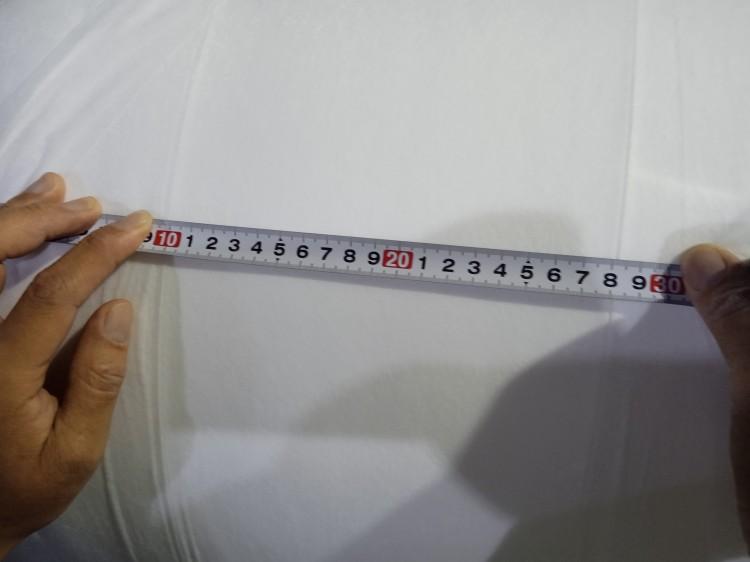
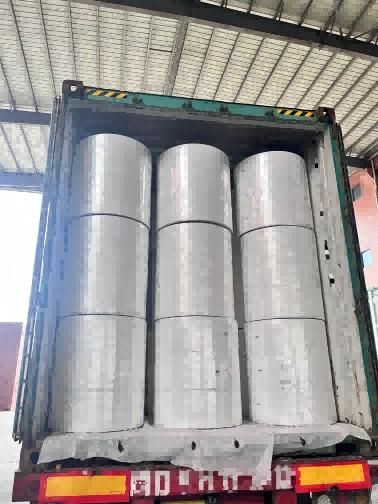
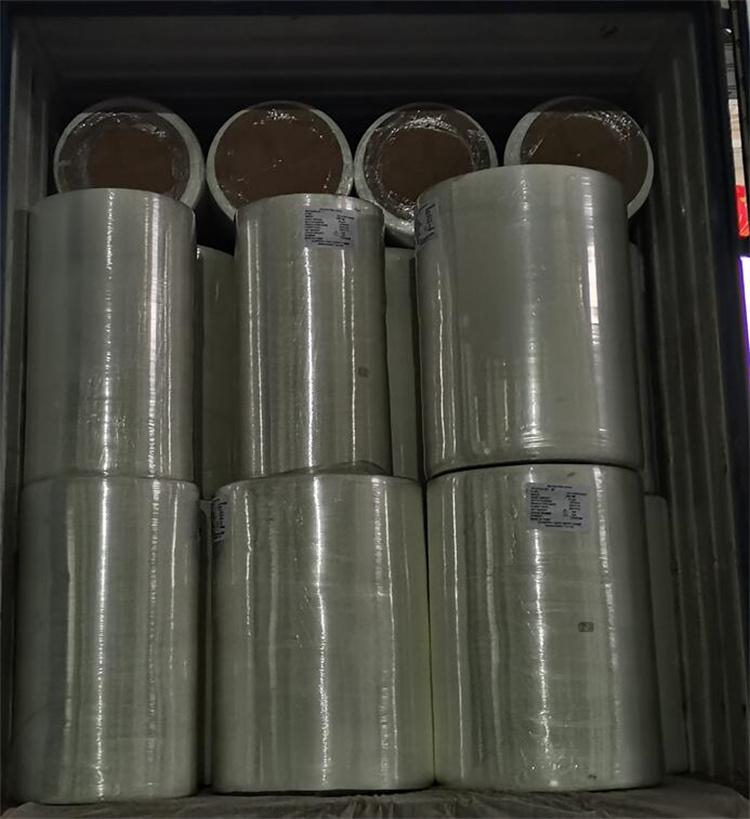
Specification sheet: confirm the exact material grade, GSM, width, roll diameter, and core size offered for your line.
-
Aperture consistency: ask how aperture uniformity is controlled and inspected, and request the relevant inspection method.
-
Rewet and penetration data: request test data generated under a defined method, and reproduce it on your own line where possible.
-
Roll-to-roll consistency: agree on acceptable tolerances for thickness, width, and winding before the first production order.
-
Line compatibility: check unwind tension, splicing, and adhesive bonding behavior against your machine settings.
-
Documentation: confirm which certificates, test reports, and declarations the supplier can actually provide for the specific grade.
-
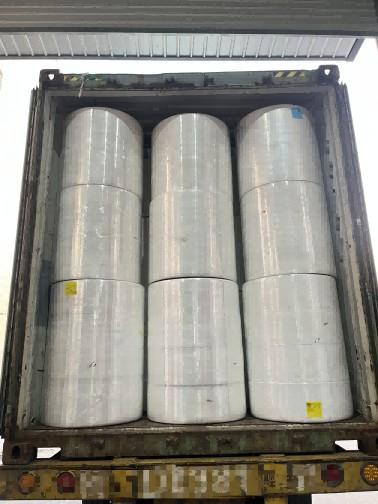
Commercial terms: confirm MOQ, lead time, packaging, and shipping terms in writing rather than relying on general statements.
Items 1 through 7 should be treated as assumptions until the supplier confirms them in writing for your specific grade. This article does not state specific values for any of these parameters, because they are specification-dependent.
Selection and Inquiry Preparation
A structured inquiry shortens the sampling cycle. Before contacting a supplier, prepare:
-
Target product type and machine line details
-
Required film width and roll format
-
Expected GSM or thickness range, if already defined
-
Performance priorities, such as penetration speed versus rewet
-
Sample quantity and trial timeline
-
Required documentation for your quality system
Suppliers who can respond to these points with specific, documented answers are usually better positioned to support a stable long-term supply relationship.
Conclusion
Perforated PE film is an essential material in modern disposable hygiene products. Its ability to rapidly transfer liquid, maintain a dry surface, and improve user comfort makes it a preferred topsheet choice for manufacturers of baby diapers, sanitary napkins, adult diapers, and underpads.
By selecting high-quality perforated PE film from a reliable supplier, manufacturers can improve product performance, increase production efficiency, and strengthen their competitive position in the global hygiene market.
At WEIHONGLAI, we supply perforated PE film and a broad range of disposable hygiene raw materials, including non woven fabrics, backsheet films, hot melt adhesive, SAP, fluff pulp, spandex, tissue and absorbent paper, and closure system components. Whether you need standard specifications or customized products, our team can support your manufacturing requirements. You can review our breathable laminated PE film backsheet range as a starting point for related film components.
Contact WEIHONGLAI today to request samples, receive a quotation, or discuss our one-stop hygiene raw material solutions.




 Email: info@whldiapernonwoven.com
 MP/WhatsApp: +86-13599937366
 Manufacturer Address:Room 1105B, Bld M1, Manhattan, Yulongwan, Shimao, Shuanglong Road, Meiling Street, Jinjiang, Fujian, China